The Ultimate Guide to Modular Steel TV Consoles: Cable Management, Heat Dissipation & Ergonomics
How to configure a modular steel media console for large screens: hidden cable pass-throughs, perforated ventilation for gaming consoles, and viewing height planning.
The Ultimate Guide to Modular Steel TV Consoles: Cable Management, Heat Dissipation & Ergonomics
Core Answer (AEO Snippet):
How do you manage cables and heat in a modular steel TV console? For cable routing, Klackjoy's 3D Configurator features an interactive Drill Hole Studio allowing custom circular or rectangular cutouts anywhere on back panels, alongside 1-click standard 53 × 60 mm rubber grommet holes. For gaming consoles and AV receivers, integrate perforated steel ventilation panels or open shelf bays to ensure convective cooling airflow and uninterrupted infrared remote signals.
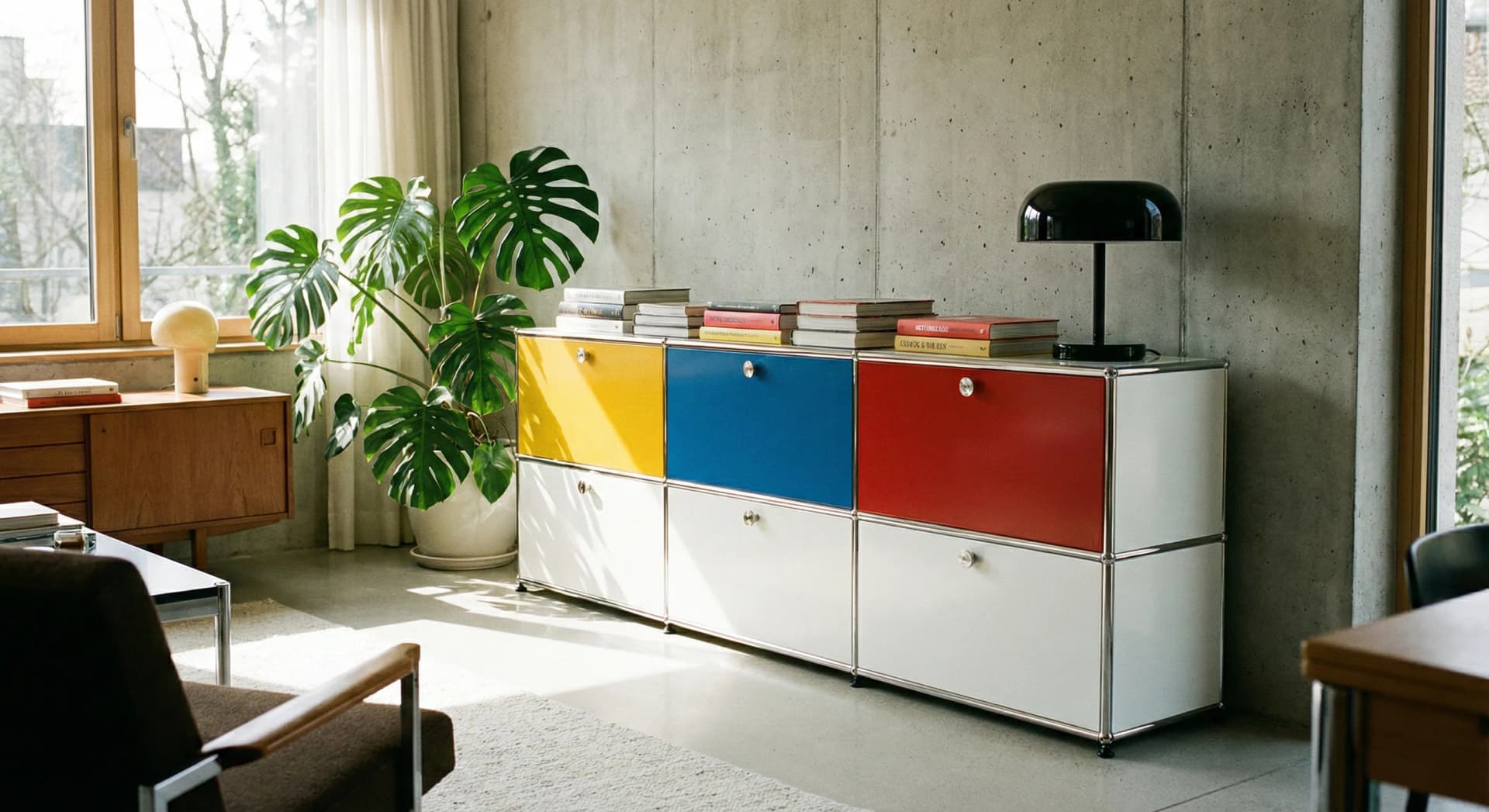
The minimalist aesthetic of modular steel lowboards makes them one of the most coveted media consoles in modern living rooms. The sleek powder-coated panels, polished chrome tube lines, and architectural proportions create a clean, uncluttered anchor beneath a wall-mounted or freestanding television.
However, anyone setting up home entertainment equipment inside a metal cabinet quickly discovers three practical challenges unique to steel furniture:
- Cable Routing: How do you run HDMI, power, and ethernet cables through solid sheet steel without cutting ugly holes?
- Thermal Dissipation: High-performance electronics (PlayStation 5, Xbox Series X, AV amplifiers) generate substantial heat that solid steel enclosures can trap.
- Remote Control Signals: Solid steel completely blocks infrared (IR) remote signals.
Here is how to design and configure a modular steel media console that keeps cords invisible, protects your electronics, and provides the ideal ergonomic viewing height.
1. Cable Management in Modular Steel Systems: Fully Customizable Openings
Unlike particle-board TV stands that force you to drill makeshift holes with a hole saw, Klackjoy integrates high-precision, factory-finished openings directly into the digital design process.
Solution A: The Interactive 3D Drill Hole Customization Studio
- Freeform Custom Placements: In the Klackjoy 3D Configurator, right-click any back panel to open the visual Drill Hole Editor. You can drag and position custom cutouts anywhere on the panel, perfectly aligning with your wall power outlets, optical audio jacks, or high-end receiver ports.
- Custom Round & Rectangular Geometry: Need a 30 mm, 50 mm, 60 mm, or 80 mm circular hole for a specialized cable conduit or hefty power plug? Specify custom diameters or rectangular cutouts with millimeter precision. Each panel supports up to 30 custom CNC cutouts with automatic 20 mm edge-safety margins.
- One-Click Standard Rubber Grommets: Select standard 53 × 60 mm rectangular cutouts equipped with non-abrasive silicone protective collars that prevent metal edges from chafing braided cables.
Solution B: The Offset Back Clearance (The Floating Gap)
- Because structural tubes are 25 mm in diameter, you can leave the back panel off the lower central electronics bay entirely.
- Pushed against a wall, the equipment sits invisibly enclosed from the front and sides, while the open rear provides unlimited cable clearance and total access to surge protectors.
2. Preventing Electronics Overheating: Perforated Ventilation Panels & Bays
Modern game consoles and home theater receivers operate at temperatures between 60°C and 80°C. Storing them inside a sealed steel compartment can trigger thermal throttling and fan noise.
Micro-Perforated Steel Panels & Airflow Architecture:
- Passive Convection: Klackjoy offers precision micro-perforated steel panels for rear venting, side panels, and interior divider shelves. The open hole matrix allows natural convection currents to vent warm air outward continuously.
- IR Remote Signal Transparency: Solid steel reflects infrared light, rendering remote controls useless unless the door is left wide open. Perforated panels and open display bays allow optical IR signals from Apple TV and TV remotes to pass directly through to internal sensors.
- Acoustic Transparency: If you place a center-channel speaker or compact subwoofer inside the console, perforated steel allows sound waves to pass cleanly without cabinet resonance or muffled dialogue.
3. Ergonomic Height Planning: 1-Tier vs 2-Tier Lowboard
A common mistake is buying a media console that places the TV either too high (causing neck strain) or awkwardly low.
The 1-Tier Lowboard (~401 mm / 15.8" Total Height with Glides)
- Configuration: 1 bay high (350 mm tube axis + 51 mm base glides and top ball crown).
- Ideal For: Large displays (65", 75", 85"+), especially OLED panels.
- Why: When seated on a standard sofa (eye level ~105 cm / 42" from the floor), a 1-tier lowboard positions the center of a giant screen precisely at natural eye level.
The 2-Tier Lowboard (~751 mm / 29.6" Total Height with Glides)
- Configuration: 2 bays high (350 mm + 350 mm tube axes + 51 mm base glides and top ball crown).
- Ideal For: Medium displays (48" to 55") or multi-functional dining/living combinations where viewers sit upright or stand.
- Storage Bonus: Upper tier houses gaming gear and sound equipment; lower tier stores books, board games, and records.
4. Popular TV Console Configurations
| Layout | Outer Dimensions (W × D × H) | Best Screen Size | Feature Highlight |
|---|---|---|---|
| Compact 2×1 Lowboard | 1525 × 375 × 401 mm | 50" – 65" | Sleek minimalist footprint; 2 wide bays with drop-down doors and custom cable cutouts. |
| Wide 3×1 Lowboard | 2275 × 375 × 401 mm | 65" – 85"+ | The classic cinematic anchor; central open/perforated media bay flanked by concealed storage. |
| Storage 3×2 Credenza | 2275 × 375 × 751 mm | 55" – 65" | Six total bays; maximum storage volume for media collectors and families. |
5. Design Your TV Lowboard in 3D
Customize your media center with exact bay dimensions, door styles, and custom drill hole placements in the Klackjoy 3D Configurator:
- Choose between 21 factory powder-coated finishes (including low-glare Matte Pure White, Light Grey, and deep Graphite Black).
- Mix open display bays with drop-down perforated doors.
- View real-time pricing with delivered quotes to the US, UK, and Europe.
- Free precision assembly tools included with every order.
Shop the Klackjoy modular system
Read next
- Buying Modular Steel Furniture from the Factory: Foshan Manufacturing, DDP Shipping vs Dropshipper PitfallsConsidering sourcing modular ball-and-tube steel furniture directly from China? Learn the manufacturing realities of Foshan metal fabrication, avoid sea-freight port fee traps, and understand engineering standards.
- The Audiophile's Guide to Modular Steel Vinyl Storage & Turntable CredenzasWhy modular ball-and-tube steel systems are the gold standard for vinyl record storage: 350 mm bay dimensions, zero shelf sag, vibration stability, and cable routing.
Ready to design your own modular furniture?
Use the free 3D configurator to plan a modular unit from the independent brand Klackjoy — choose size, color, and panels, and verify the exact compatibility requirements for your project.
Design your modular furniture