How to Share Your Furniture Design With Family Before You Buy
Furniture decisions are rarely made alone. Klackjoy's save & share feature lets you save your 3D configurator design and send a live link — dimensions, price, and all — to a partner or designer for approval, no account required to view.
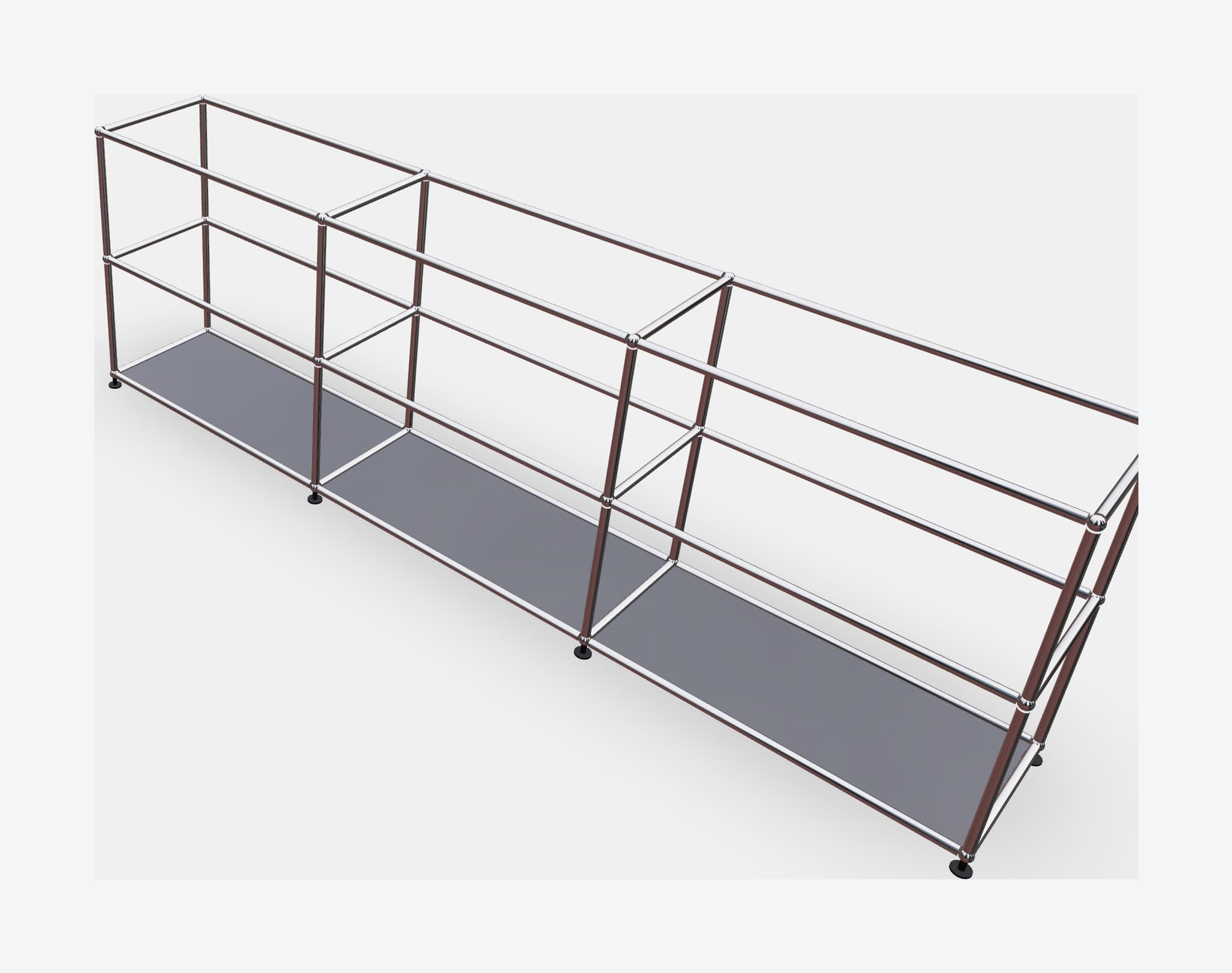
How to Share Your Furniture Design With Family Before You Buy
Almost nobody buys a big modular shelving unit alone. A partner has opinions about where the TV should sit. A roommate wants to know if their record collection still fits. An interior designer needs to sign off on dimensions and color before a project moves forward. Furniture decisions — especially ones involving a piece that will anchor a living room or office for the next decade — are joint decisions by default, even when only one person is sitting at the keyboard designing it.
The trouble is that a 3D configurator session doesn't travel well. You can spend twenty minutes getting the width, the door placement, and the color combination exactly right, but the moment you close the tab, that specific configuration is gone unless you know how to preserve and hand it to someone else. A screenshot flattens a 3D model into a single angle and strips out the price and dimensions. Describing it over text message ("it's like a graphite black sideboard, six columns, two drawers on the left") loses precision fast, and precision is exactly what the other person needs to say yes.
The problem: showing someone else what you built
Think about the actual moments where this comes up:
- You've configured a media console late at night while your partner was asleep, and now you want them to see the real thing — not your verbal description of it — before you commit to a purchase.
- You're working with an interior designer on a client's living room, and they need to review your exact configuration (dimensions, panel layout, color) before they approve it for the project.
- You and a sibling are splitting the cost of a shelving unit for a shared space and need to agree on the layout before either of you pulls out a credit card.
- You want a second opinion from a friend who has more experience with modular furniture, and a link is far easier to send than trying to recreate the design from memory on their own screen.
In every one of these cases, the person reviewing the design doesn't need to touch the configurator. They just need to see, accurately, what you built — including how much it costs — so they can weigh in with real information instead of guesswork.
How Klackjoy's save & share feature actually works
Klackjoy's configurator includes a save and share feature built for exactly this situation. Here's how it works, step by step:
- Sign in. Saving a configuration is tied to your account, so you'll need to be signed in first. This is what lets you come back to a saved design later, keep a history of configurations, and generate a shareable link.
- Save your configuration. Once you're happy with your layout — node positions, tube lengths, panel colors, door and drawer placement — save it. This captures the exact design as a record, not just a snapshot image.
- Generate a link. Saving produces a unique link to that specific configuration.
- Send the link to anyone. Text it, email it, drop it in a group chat — however you'd normally share a link.
- They open it and see the live design. Whoever receives the link can open it in their browser and see a real, interactive 3D view of your exact configuration — the actual model, not a static picture — along with the dimensions and the price.
The key detail here is that viewing a shared link does not require an account. Your partner, your designer, your sibling, your friend — none of them need to sign up for anything or remember a password. They click the link and the design loads, fully rendered, with the numbers that matter (size and price) right there next to it. The only account requirement in this whole flow is on your side, for saving.
That asymmetry is deliberate and it's worth understanding clearly: saving is a signed-in action because it's tied to your history and your account; viewing is open because the entire point is to remove friction for the person you're trying to get buy-in from. Nobody makes a purchase decision faster because they had to create a login first — if anything, that's exactly the kind of barrier that kills a "let me check with my partner" moment.
Real use cases
Getting buy-in from a partner. This is probably the single most common reason people reach for the share link. You've done the design work — picked the width that fits the wall, chosen a color that matches the room, decided how many drawers versus open shelving you actually need. Now you want your partner to see it and weigh in before you check out. Send the link, they open it on their phone or laptop, they see the same 3D model you built with the actual price attached, and you have a real conversation instead of a hypothetical one.
Sending a design to your interior designer for approval. If you're working with a designer on a room and they want to review or approve the furniture before the project proceeds, a share link gives them everything they need in one place: the layout, the exact panel colors and door/drawer placement, the overall dimensions, and the price — all inside a live 3D view they can rotate and inspect. There's no back-and-forth of "can you send me the spec sheet" or "what color did you end up choosing" — it's all sitting in the link itself.
Splitting a purchase or coordinating a shared space. If two people are contributing to the cost of a unit for a shared home office, apartment entryway, or living room, a link makes it trivial for both people to look at the same design and agree on it before money changes hands.
Getting a second opinion. Sometimes you just want someone with a good eye — a friend who's furnished a few apartments, a family member with design sense — to look at what you've built and tell you honestly whether it works. A link takes thirty seconds to send and gives them everything they need to give you a real answer.
Be precise: this is link-sharing, not live co-editing
It's worth being clear about what this feature is and isn't, because the distinction matters if you're planning around it.
Klackjoy's save & share is asynchronous link-sharing. You configure a design, save it, and send a link. The person who receives it views a live, accurate 3D rendering of that saved state — they can rotate it, look at it from different angles, and see the dimensions and price — but they are looking at a snapshot of your work, not a shared live session.
This is not real-time collaboration. Two people cannot open the same configurator session at the same time and watch each other's changes appear live, the way you might co-edit a shared document. If your partner wants to try swapping a color or resizing a shelf, they'd need to either tell you what they'd change, or start their own configurator session and build their own version. There's no simultaneous "you drag a panel and I see it move on my screen" experience here.
For the actual use case this feature is built around — showing someone a finished (or near-finished) design so they can approve it, react to it, or weigh in before a purchase — asynchronous sharing is the right tool, and it's genuinely useful. Just don't expect it to behave like a shared whiteboard or a video call; it's closer to sending someone a live, interactive proof than to co-designing in real time.
Why this matters more for modular furniture
Modular pieces like the ones in Klackjoy's catalog have more decision points than an off-the-shelf shelf: how many columns, how many rows, which panels are doors versus drawers versus open shelving, which color for which panel (every single panel can carry its own color and material), and how deep and wide the whole thing runs. That's a lot of specific choices for someone else to evaluate secondhand. A share link collapses all of that into one accurate, interactive view — nobody has to trust your description or imagine the color from a name.
Klackjoy pieces are built to be physically compatible with genuine USM Haller components — same 25mm chrome-plated ball connectors, same stainless steel tube system, same standard sizing — while typically running 60-70% cheaper, sold factory-direct. The configurator (and the share link that comes out of it) is part of how that direct model works: what you design is the actual spec, viewable by anyone you choose to send it to, with the real price attached, before anyone commits to buying.
Try it yourself
If you're mid-design and want a second opinion, or you're putting together a proposal for a client, build your configuration in the Klackjoy configurator, save it while signed in, and send the link to whoever needs to see it. They'll get the real 3D model, the real dimensions, and the real price — no account, no guesswork, no flattened screenshot.
Open the configurator and start designing.
Frequently Asked Questions
Does the person I share the link with need an account?
No. Viewing a shared link does not require an account. Your partner, your designer, your sibling, your friend — none of them need to sign up for anything or remember a password. They click the link and the design loads, fully rendered, with the numbers that matter (size and price) right there next to it. The only account requirement in this whole flow is on your side, for saving.
Can we edit the design together at the same time?
No. Klackjoy's save & share is asynchronous link-sharing, not real-time collaboration. Two people cannot open the same configurator session at the same time and watch each other's changes appear live, the way you might co-edit a shared document. If your partner wants to try swapping a color or resizing a shelf, they'd need to either tell you what they'd change, or start their own configurator session and build their own version. There's no simultaneous "you drag a panel and I see it move on my screen" experience here.
Do I need an account to save and share my design?
Yes, to save. Saving a configuration is tied to your account, so you'll need to be signed in first. This is what lets you come back to a saved design later, keep a history of configurations, and generate a shareable link. Viewing a shared link, on the other hand, does not require an account — that part is open to anyone you send it to.
What does the person viewing the link actually see?
They see a real, interactive 3D view of your exact configuration — the actual model, not a static picture — along with the dimensions and the price. They can rotate it and inspect it, but they are viewing a saved state rather than a live shared session.
Is this the same as sending a CAD or Revit file?
No. There's no CAD or Revit file involved anywhere in this flow. The link points directly to your saved configurator design, which already functions as the specification — dimensions, panel layout, colors, and price all included — so there's no separate file to create, export, or attach.
Shop the Klackjoy modular system

Read next
- The USM Haller Changing Table That Grows With Your ChildA modular changing table that unbolts and rebuilds into toy storage, then a kids' desk and shelving — one USM-compatible frame that spans the whole nursery-to-schoolroom journey. Buy once, reconfigure for years.
- USM Haller Record Stand: A Cheaper Custom Hifi & Vinyl Setup
Ready to design your own modular furniture?
Use the free 3D configurator to plan a modular unit from the independent brand Klackjoy — choose size, color, and panels, and verify the exact compatibility requirements for your project.
Design your modular furniture