The Anatomy of Quality: The Materials Behind Klackjoy
Distinguish connector, tube and panel specifications. Check the selected configuration's materials, dimensions, test evidence and installation requirements.
Ready to design your own modular furniture?
Use the free 3D configurator to plan a modular unit from the independent brand Klackjoy — choose size, color, and panels, and verify the exact compatibility requirements for your project.
Price example: a 2×2 sideboard with four drop-down doors, 152 × 75 cm — $988.81 before delivery. See this sideboard →
Design your modular furnitureMade to order. Delivery time varies by destination; duties and taxes are included under DDP.
When people call USM Haller "furniture for life," they are really talking about materials and build quality. The ball-and-tube system has stayed in production for decades not because of a clever shape alone, but because of what each part is physically made of and how its finish is applied. Klackjoy publishes descriptions of its own component materials. Because the parts are built to the same dimensions, Klackjoy is physically compatible with genuine USM Haller, mixing and extending existing units 1:1.
This article is about the materials and longevity — what the parts are actually made of, why the finishes survive years of daily use, and what makes the engineering tolerance tight enough for true 1:1 compatibility. (If you want the dimensional grid, RAL palette table, and pricing comparison instead, see our dedicated "Is Klackjoy compatible with USM Haller?" guide.)
The connector ball: chrome-plated brass
The defining joint of the whole system is a single component: a 25 mm chrome-plated brass ball. This is the one part Klackjoy keeps unchanged as the structural ball-joint, because it is the heart of the ball-and-tube design.
The core is brass — a copper-zinc alloy chosen for a specific reason. Brass machines cleanly and holds a precise internal thread without cracking or galling, which matters because each ball carries up to six M8 threaded seats, one along each axis. A brass core gives you that thread precision plus excellent dimensional stability: it does not warp, and it resists the internal corrosion that would eventually loosen a joint.
Over that brass core sits a layer of chrome plating. The chrome is what you see and touch — the mirror-bright surface that has become the visual signature of the system. Just as importantly, chrome plating is hard and corrosion-resistant, so the ball keeps its shine and its grip on the threads for the long haul. To be precise about what the part is: it is not solid chrome, and it is not bare brass — it is a brass core with a chrome-plated finish. That combination is why a single connector can be tightened, loosened, and re-tightened across years of reconfiguration without wearing out.
Tubes and panels: distinguish the component finishes
Klackjoy's published component description identifies polished chrome-plated stainless steel tubes and powder-coated metal panels. The brass connector has a chrome-plated finish. These are different component descriptions; do not describe all tubes and panels as sharing one finish.
A finish description alone does not establish a universal scratch-resistance, color-fastness or lifetime result. Check any performance claim against a test or product specification for the selected part and its intended use.
Standard tube lengths
The steel tubes come in a fixed set of standard lengths so that every unit sits on the same modular grid. The nominal lengths (in mm) are:
100 · 150 · 175 · 250 · 350 · 395 · 500 · 595 · 750
These nominal sizes are measured center-to-center between two connector balls. The overall physical length is the nominal size plus the 25 mm ball — so a 750 mm tube spans 775 mm tip to tip. Because Klackjoy uses this exact same length set on all three axes, its frames occupy the same footprint as the USM Haller equivalent, which is the first half of why the two systems interlock.
Build tolerances: why 1:1 compatibility is physical, not approximate
Compatibility is not a marketing claim layered on after the fact — it is a consequence of holding the same dimensions and the same thread standard. Three things have to line up for a Klackjoy part to bolt into a USM Haller frame:
- The connector geometry — the same 25 mm ball with the same M8 thread, so a tube threads into either brand's ball identically.
- The tube lengths — the same standard length set, so a Klackjoy tube spans the exact same distance as its USM counterpart and the grid stays square.
- The panel sizing — panels cut to the same module so they seat cleanly into the frame's openings.
Hold all three to a tight enough tolerance and the parts are not merely "similar" — they are physically interchangeable. A Klackjoy column threads onto the same balls, a Klackjoy panel drops into the same bay, and the finished result reads as one continuous piece. That is what we mean by 1:1: you can extend an existing USM Haller installation, or build a complete standalone unit from scratch, using the same construction logic either way.
How can I verify panel materials before choosing a modular cabinet?
A material name, a finish description and a performance test answer different questions. Start by recording which part you are choosing: connector, tube, shelf, side panel, door or drawer front. A statement about the connector does not establish the panel's thickness, and a panel finish does not establish the tube's finish.
Klackjoy's published component description distinguishes 25 mm chrome-plated brass connectors with M8 internal threads, polished chrome-plated stainless steel tubes, and powder-coated metal panels. Treat those as component descriptions, not as a certificate for every configuration. The 25 mm figure describes the connector diameter; it is not a steel-panel thickness specification. The material and finish of any alternative panel should be checked for the actual product and panel type you select.
Before comparing options, ask for the evidence that answers your intended use:
| Decision | Record before choosing | What it does not prove |
|---|---|---|
| Material and finish | Product or part identifier, substrate and finish description | A name alone is not a supplier certificate |
| Fit | Panel position, nominal module and the selected configuration's dimensions | Matching one dimension is not complete fit verification |
| Load | Applicable instructions and a limit for the actual shelf or layout, if provided | A steel label is not a load rating |
| Surface appearance | The selected finish, dated sample or product photograph and its limitations | A screen rendering is not an exact physical color match |
| Durability | Test method, conditions, sample and result, if a performance claim matters | Powder coating alone is not proof of scratch resistance or a no-fading lifetime |
| Installation | Applicable assembly and anchoring instructions | A 3D preview does not certify anti-tip safety |
Do not fill a missing specification with a number from another component or another brand. If no matched thickness, load limit or test report is available, keep that item unverified and avoid making the corresponding performance claim. A documented panel specification can support that panel's description; it cannot automatically certify other materials, different front types or a complete cabinet.
Use the existing 3D configurator to explore the layout and the panel options available for that configuration. Record the selected panel positions and planned overall dimensions, then compare them with the relevant product descriptions and installation instructions. Configuration availability is not, by itself, an independent material certificate.
For price comparisons, match the layout and included components and check a dated quote for the same destination, currency and tax/delivery basis. Do not infer a delivered-price saving from the material name or from a generic percentage. Klackjoy is an independent brand and is not affiliated with USM.
Why it lasts — and the warranty behind it
Each material is doing the job it is best at. Brass gives the connector its precise, re-usable thread; chrome gives that connector a hard, corrosion-resistant face; steel gives the structure its strength; and powder coating gives every visible surface a tough, color-fast skin. Nothing here is a wear part in the disposable sense — the system is designed to be taken apart and rebuilt into a new shape years later, which is exactly why USM Haller units routinely outlive the rooms they were bought for.
Klackjoy states a 10-year structural warranty for eligible frames. Review the published warranty terms and exclusions for the selected configuration. Compare current prices using a matched configuration, currency and delivery destination; a material description does not establish a fixed percentage saving or identical quality.
Configure your unit and see your price in the 3D configurator →
Frequently Asked Questions
What is the USM Haller connector ball actually made of?
The connector is a 25 mm chrome-plated brass ball with M8 threaded seats. The core is brass — chosen because it machines a precise, durable internal thread — and the visible mirror surface is a layer of chrome plating that is hard and corrosion-resistant. It is not solid chrome and not bare brass; it is a brass core with a chrome-plated finish. Klackjoy uses this same connector standard, which is one reason its parts are physically compatible with USM Haller.
What are the tubes and panels made of?
Klackjoy's published component description identifies polished chrome-plated stainless steel tubes and powder-coated metal panels, with chrome-plated brass connectors. Verify the material and finish for the selected product and panel type. A material or finish description alone does not certify a particular load, scratch-resistance or lifetime result.
Why does powder-coated steel last so long?
Powder coating is applied as a dry powder and then cured under heat so it fuses into one continuous layer bonded to the steel. That makes it much tougher than wet paint: it resists scratches and chips, holds its color instead of yellowing in sunlight, and wipes clean because the surface is non-porous. Combined with a steel substrate, the result is a panel that keeps looking new for years.
Why is Klackjoy physically compatible with USM Haller?
Because the parts are built to the same material and dimensional standard: the same 25 mm chrome-plated brass connector with M8 thread, the same standard tube lengths (100–750 mm measured center-to-center), and panels sized to the same module. Holding all three to a tight tolerance makes the parts physically interchangeable, so a Klackjoy section threads onto the same balls and seats into the same frame as genuine USM Haller — letting you extend an existing unit 1:1.
How long does Klackjoy last, and is there a warranty?
Klackjoy states a 10-year structural warranty for eligible frames; review its current scope, terms and exclusions before ordering. A warranty term is not a promise of unlimited service life. Material descriptions alone do not establish identical quality or a current fixed price saving; compare the selected configuration and dated delivered quotes.
Shop the Klackjoy modular system
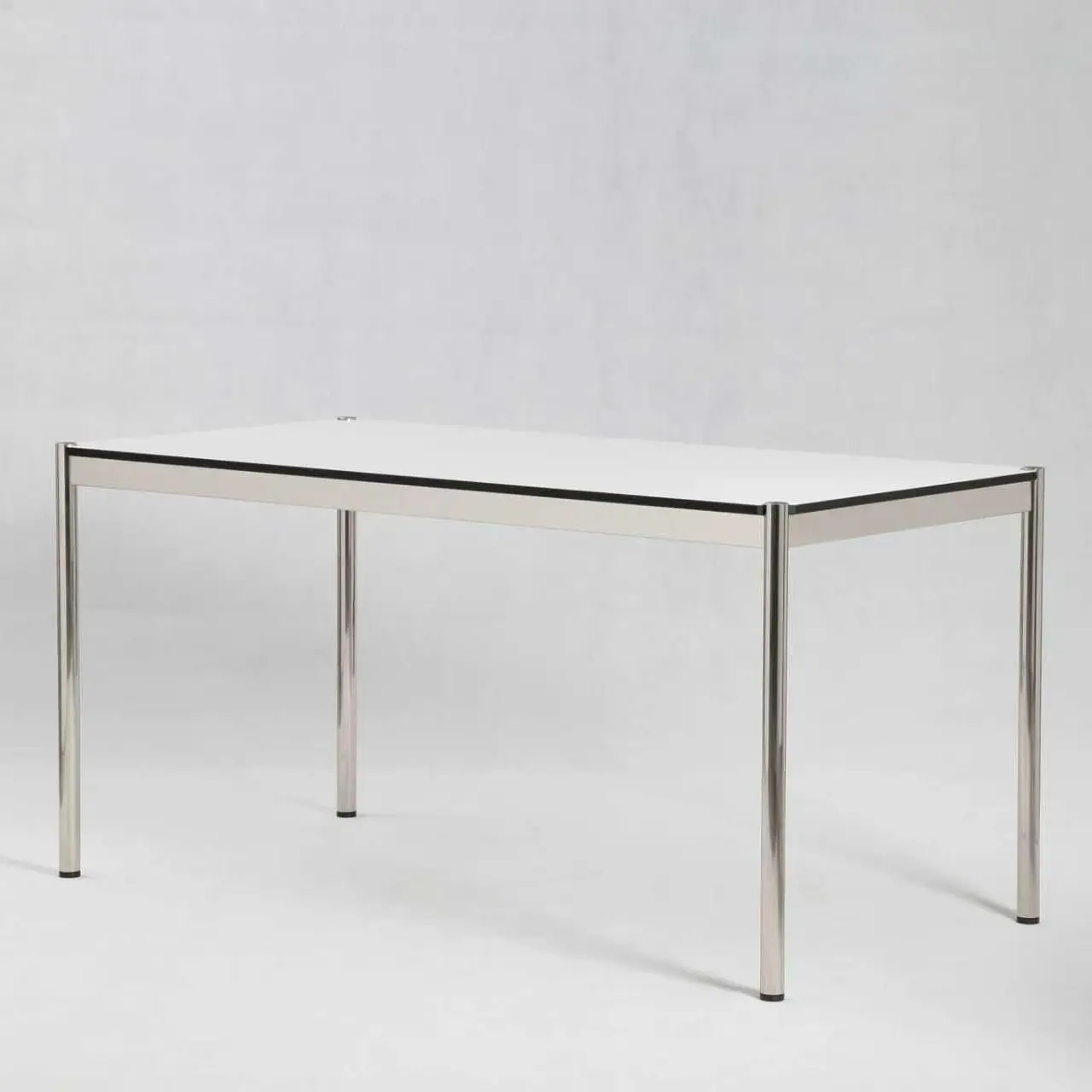
Read next
- USM Haller: Buy Used, New or Compatible?Used is cheap but often incomplete; new costs about three times as much. How to bring the two worlds together: complete a used frame with 1:1 compatible parts — around 60–70% cheaper than new goods, with a 10-year structural warranty.
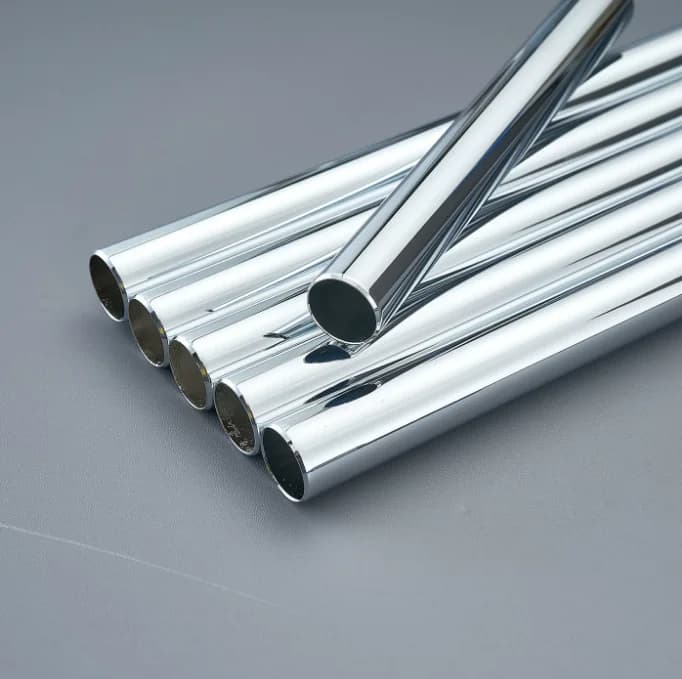 Extend Your USM Haller: Compatible Parts at a Fraction of the CostExtend or repair your existing USM Haller at a fraction of the cost with compatible Klackjoy parts: 25 mm chrome balls (M8) and standard tube sizes designed for modular grids.
Ready to design your own modular furniture?
Use the free 3D configurator to plan a modular unit from the independent brand Klackjoy — choose size, color, and panels, and verify the exact compatibility requirements for your project.
Price example: a 2×2 sideboard with four drop-down doors, 152 × 75 cm — $988.81 before delivery. See this sideboard →
Design your modular furniture