Modular Wardrobe & Closet Ideas: USM Haller-Style Storage
Design a modular wardrobe, open storage wall or walk-in closet in the USM Haller style — adjustable shelves, optional doors and layouts you can extend anytime.
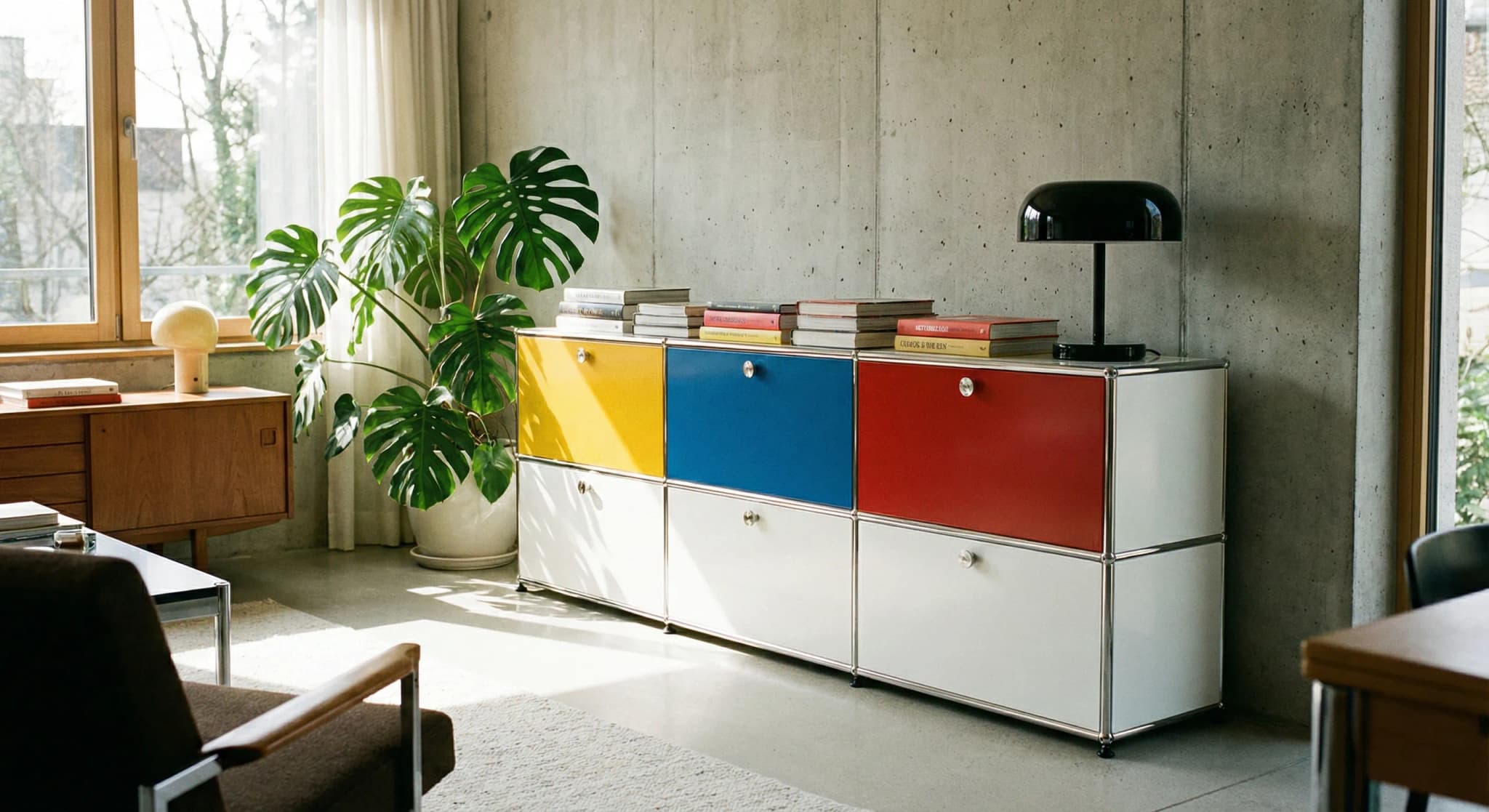
A well-organised wardrobe does more than hold clothes — it shapes how your morning begins and how calm your bedroom feels. With a modular system in the USM Haller style, you can design a wardrobe that fits your room, your garments and your habits exactly, then change it whenever life does.
Why Modular Works for Wardrobes
Adjustable Shelf Heights
Folded knitwear, shoe boxes and accessory trays all need different clearances. On a modular frame, a shelf sits wherever a tube crosses the structure, so you set each height to the garment — not to a factory's fixed spacing. Reorganise a whole column in an afternoon without tools or trades.
Doors Are Optional, Not Fixed
Choose open shelving for a boutique, walk-in feel; add hinged or drop-down doors where you want dust protection and a calmer visual; or mix both in a single frame. Nothing is welded shut, so the decision is never permanent — swap an open bay for a closed one whenever your taste changes.
No Full Custom Joinery
A built-in wardrobe locks you into one room forever and is priced accordingly. A modular wardrobe gives you a bespoke fit from standard, repeatable parts — steel tubes and 25 mm chrome-plated brass ball connectors — that you can dismantle, move to a new home and reconfigure into a completely different piece.
Physically Compatible With USM
Klackjoy parts are physically compatible with existing USM Haller furniture, so a new wardrobe can extend or match a unit you already own — typically at around 60 to 70 percent less cost, with a 10-year structural warranty and a 3D configurator to plan it.
Three Wardrobe Layouts
Open Display — The Walk-In Feel
Configuration: open shelving + hanging rail | Light Grey Turn a wall or alcove into an open dressing zone. Shelving carries folded knits and shoes, a rail holds hanging garments, and open cubbies keep bags visible and reachable. Best for dressing rooms, generous bedrooms and anyone who likes to see the whole wardrobe at a glance.
Behind Doors — Calm and Dust-Free
Configuration: closed compartments + doors | Pure White When you want the bedroom to read as clean and quiet, front the frame with doors. Folded clothing, linens and off-season pieces stay hidden and protected, while the flat door faces keep the room visually still. Best for bedrooms where the wardrobe should recede rather than perform.
The Hybrid — Best of Both
Configuration: open + closed bays | Anthracite Mix an open hanging section with closed drawers and doored cabinets in one continuous run. Everyday outfits stay on show and within reach; clutter, valuables and rarely-worn items disappear behind doors. Best for main bedrooms and real, lived-in routines.
Small-Space Wardrobe Solutions
Tight bedrooms reward going vertical and shallow:
- Single tall column — a 1-wide, full-height unit stores a surprising amount in minimal floor area.
- Shallow folded storage — where hanging depth will not fit, build shelves for folded clothing at a slimmer depth.
- Over-and-under zoning — hanging rail up top, drawers below, so the footprint stays small while capacity grows upward.
- Grow later — start with one column and add width or height as your wardrobe expands, reusing the same connectors and tubes.
Getting the Depth Right
Depth is the detail most people get wrong. Garments hung front-to-back (on their shoulders) need roughly 55 to 60 cm of clear depth so sleeves and lapels do not crush against the doors — a 595 mm tube suits this well. Shelved, folded and accessory storage works comfortably at shallower depths, so a mixed wardrobe can step from a deep hanging section to slimmer shelved bays.
Standard USM-compatible tube sizes run 100, 150, 175, 250, 350, 395, 500, 595 and 750 mm, giving you a fixed but flexible grid to plan around. The overall dimension of any run is the nominal size plus 25 mm for the connecting nodes.
Choosing a Colour
Wardrobe colour sets the mood of the bedroom:
- Pure White / Light Grey — recede quietly, making a large wardrobe feel lighter and letting the room breathe.
- Anthracite / Graphite Black — anchor a space and read as calm and architectural.
- A single accent colour — behind open shelving, a coloured back panel turns the wardrobe into a feature wall.
Neutral frames adapt to any bedroom scheme; a bold colour makes the wardrobe a deliberate statement, so commit to it intentionally.
Ready to design your wardrobe? Launch the Configurator and build storage that fits your room and your clothes exactly.
Related Articles:
Frequently Asked Questions
Can I build a wardrobe with a USM Haller-style modular system?
Yes. A USM Haller-style system builds a full wardrobe from steel tubes and 25 mm chrome-plated brass ball connectors, so you can create open shelving, a hanging section and closed cabinets in one frame. Because Klackjoy parts are physically compatible with existing USM furniture, you can also extend a wardrobe you already own instead of replacing it.
How does a modular wardrobe hold hanging clothes?
A modular wardrobe holds hanging clothes on a rail fixed between two uprights, exactly where you place it in the frame. Position the rail high enough for full-length coats or dresses and leave shelf or drawer space below. For garments hung front-to-back, allow roughly 55 to 60 cm of depth so shoulders and sleeves are not crushed against the doors.
What depth should a modular wardrobe be?
For clothes hung front-to-back on their shoulders, build the wardrobe around 55 to 60 cm deep so garments hang freely; a 595 mm tube suits this. Shelved and folded storage works comfortably at shallower depths, so a mixed wardrobe can use a deep hanging bay next to slimmer shelved sections to save space.
Are open or closed wardrobe configurations better?
Neither is universally better — it depends on the room. Open shelving gives a boutique, walk-in feel and keeps everything visible and reachable, while doors protect clothes from dust and keep the bedroom visually calm. A modular frame lets you mix both in one run and swap an open bay for a closed one later, because nothing is fixed permanently.
Can I extend a Klackjoy wardrobe as my storage needs grow?
Yes. You can add columns, height, shelves, drawers or doors to a Klackjoy wardrobe at any time using the same connectors and tubes, so it grows with you instead of being replaced. Klackjoy parts are also physically compatible with existing USM Haller units, so a wardrobe can extend furniture you already own at around 60 to 70 percent less cost.
Shop the Klackjoy modular system

Read next
- USM Haller Room Divider: A Double-Sided Shelf Built to Your Exact OpeningA freestanding, double-sided USM Haller room divider zones an open-plan home while staying accessible from both sides. Klackjoy builds it to your exact width and height in a live 3D configurator.
- Stainless Steel USM Haller Panels: The Made-to-Order GuideUSM Haller frame tubes are stainless steel, but a stainless-steel panel finish is a separate, bespoke option. Here is what stainless panels suit, how they fit, and how to request one from Klackjoy.
Ready to design your own modular furniture?
Use the free 3D configurator to plan a modular unit from the independent brand Klackjoy — choose size, color, and panels, and verify the exact compatibility requirements for your project.
Design your modular furniture