Modular vs Traditional Furniture: Which System Fits Your Life?
Modular vs traditional furniture—a fundamental design decision. Modular systems adapt as your life changes; traditional pieces provide permanence and craftsmanship. Discover which fits your lifestyle, budget, and space.
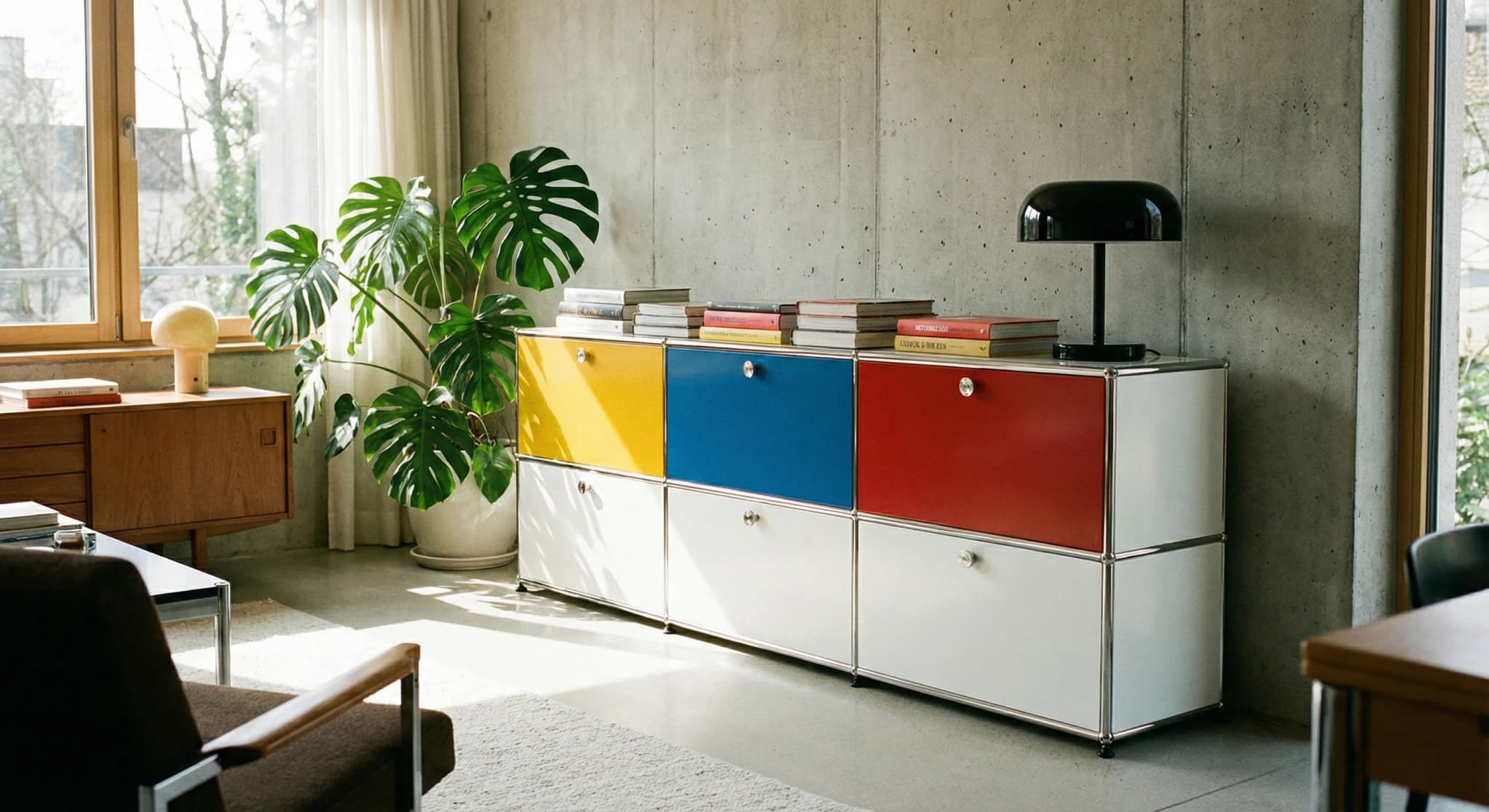
Modular furniture systems have existed for decades, but most people still imagine furniture shopping the way their grandparents did: pick a fixed size, pick a fixed colour, take it home and live with it for the next twenty years. Ball-and-tube systems like Klackjoy represent a different category entirely. You build what you need — now and later — by combining nodes, tubes and panels from a modular parts library. No two configurations are identical. Extensions and reconfigurations happen without buying new furniture.
This article explores why modular systems matter as a category, how they differ from traditional furniture in ways that compound over time, and why the choice between modular and fixed furniture is fundamentally a choice about flexibility, longevity and long-term cost.
Modular vs Traditional: The Key Structural Differences
The real difference between modular and traditional furniture is not about "cost per unit today" — it is about what happens when your needs change.
| Aspect | Modular System | Traditional Furniture |
|---|---|---|
| Adaptability | Reconfigure geometry, colours, footprint without replacement | Fixed form; moving or extending requires new purchase |
| Part Reusability | Extend by adding tubes, panels, nodes from the same catalog | Entire piece replaced; old furniture discarded |
| Long-term economics | Cost per year decreases with extensions; single investment spreads over years | Each room change or size need triggers new spending |
| Lifecycle | Structural parts warranty typically 10+ years; refresh surfaces without replacing frame | Entire piece is the unit of replacement |
| Customisation depth | Component-level: add, remove, recolour individual parts | Surface-level: paint or recover, but geometry is fixed |
| Space constraints | Flex size in steps (100 mm increments typical) to fit any room | Choose from standard sizes; compromise on fit |
Modular systems demand an upfront decision: you buy into a parts library and standards. Traditional furniture demands a series of replacements.
Why Modular Matters When Life Changes
Three scenarios make the modular advantage compound:
-
Office growth. A growing team rents a larger office. With modular shelving, you take your existing frame, add tubes and panels for extra height or width, and deploy it the same day. A traditional cabinet gets discarded and replaced.
-
Lifecycle refresh without replacement. Ten years in, the powder-coat finish on the steel fades but the structure remains sound. With a modular system, you can replace individual panels and tubes by colour order without replacing the entire unit. With traditional furniture, you accept the age or replace the whole piece.
-
Mixed-use spaces. A home office becomes a guest bedroom becomes a craft studio. Modular systems accommodate all three through reconfiguration. Traditional fixed-form furniture is optimised for one purpose; repurposing means buying again.
How Modular Systems Handle Quality and Longevity
A well-designed modular system is not "cheap furniture that happens to be reconfigurable." It is infrastructure. Ball-and-tube systems (chromium-plated brass joints, powder-coated steel tubes) are engineered for:
- Structural reliability over decades, not years
- Interchangeable parts without drift or slop — tight tolerances across years of production
- Maintenance access — individual components are replaceable without disassembly
- Standard material specs across the entire catalog (RAL colour consistency, steel gauges, joint thread standards)
A traditional sideboard might cost more upfront and look refined, but after eight years your only option is to live with the damage or buy new. A modular system, by design, gives you options.
The Klackjoy Case Study: Modular in Practice
Klackjoy is one implementation of the ball-and-tube modular principle — 25 mm chrome-plated brass nodes, powder-coated steel tubes in nine standard lengths (100–750 mm), panels in steel, MDF and glass. The system cost is low enough for home offices and living rooms, but robust enough to support commercial studios and small businesses.
Starter configurations:
- 2×1 sideboard (1,500 mm wide, 350 mm deep, 350 mm tall): ~€1,100 factory-direct
- Expandable by adding columns, depth, height in incremental steps
- Colours can be swapped per component, not per-piece
This is not marketed as a "cheap option." It is an example of how modular systems reduce the total cost of ownership by letting you spread investment over time and reuse structure across reconfigurations.
Modular Systems Are Not for Everyone
Be honest about your needs:
- If you rent short-term (< 2 years), traditional ready-made furniture is faster. Modular systems pay off in spaces you occupy and reconfigure over years.
- If you need showroom delivery and on-site installation, dealer-based furniture networks (often associated with traditional higher-end pieces) may be worth the premium.
- If your space and needs are truly fixed for a decade or more, a well-made traditional piece can be simpler than managing a modular system.
- If you care deeply about design heritage (e.g., a Swiss icon with seventy years of history), that value is separate from whether it is modular or fixed-form.
Modular systems excel when life is the variable and your furniture needs to flex with it.
Explore Modular in the 3D Configurator
The fastest way to understand a modular system is to use one. We built a 2×1 sideboard preset — the proportions of a common modular starting point — that you can modify in real time: add columns, increase depth, swap back panel colour, drop in drawers, change materials.
Try the modular configuration builder →
If you like the result, save it to your account and the price updates in real time as you add or remove components. Nothing is final until checkout.
Frequently Asked Questions
What are the main advantages of a modular system over traditional furniture?
Modular systems let you adapt to changing needs without replacement. A modular shelving unit can grow in height or width, swap finishes per component, or be relocated and reconfigured in a new space. Traditional furniture is optimised for a single size and purpose; growth or repurposing means buying new pieces.
How long do modular systems typically last?
Well-engineered ball-and-tube systems (like Klackjoy) are designed with 10-year structural warranties on core elements (nodes and tubes). Panels and finishes can be refreshed independently. In practice, a quality modular frame can support reconfigurations and component swaps for 15–25 years, spreading cost across many uses.
Can I extend a modular system if I need more space?
Yes, that is the core design principle. You add tubes, nodes and panels from the same catalog. If the system has been in production long enough, older parts are likely still available. This is why standard dimensions and thread specs matter — they enable future extensions.
Is modular furniture more expensive than traditional furniture?
The entry price is often lower (modular pieces are direct-from-factory in many cases). But modular value is measured over decades, not at purchase. A modular sideboard that costs €1,100 and gets extended twice across fifteen years will have cost less per year than buying three separate traditional sideboards.
Can modular systems match existing furniture?
This depends on the modular system and what you already own. If you own other modular units from the same manufacturer, new additions will be functionally identical but finish batches may not match perfectly. If you own traditional furniture, a modular system will look distinct — they follow different design languages.
What should I know about replacing parts?
Quality modular systems keep parts in stock or available through a catalog for many years. Nodes, tubes and panels can be ordered individually without buying the whole unit. However, if the system is discontinued or the manufacturer stops supporting it, future extensions become harder.
Is a modular system right for small spaces?
Yes. One of modular system strengths is that you can build exactly the size you need (in incremental steps like 100 mm) rather than choosing from fixed standard sizes. A small living room can have a modular sideboard that is 1,200 mm wide instead of being forced to choose between 1,000 mm (too small) and 1,500 mm (too large).
How do I know if modular is right for me?
Ask: Do my space needs or room assignments change every few years? Do I value the ability to refresh colours or materials without replacing the whole piece? Am I willing to learn a parts catalog to get long-term flexibility? If yes to two or more, modular is worth exploring.
Shop the Klackjoy modular system

Read next
- The USM Haller Changing Table That Grows With Your ChildA modular changing table that unbolts and rebuilds into toy storage, then a kids' desk and shelving — one USM-compatible frame that spans the whole nursery-to-schoolroom journey. Buy once, reconfigure for years.
- USM Haller Record Stand: A Cheaper Custom Hifi & Vinyl Setup
Ready to design your own modular furniture?
Use the free 3D configurator to plan a modular unit from the independent brand Klackjoy — choose size, color, and panels, and verify the exact compatibility requirements for your project.
Design your modular furniture